TOILET TRAINING
Best start in life
Potty training is an important step for you and your child. Learning to use a potty, and then the toilet on their own takes time, practice and patience. If you're starting potty training or you want to build your child's confidence to use the toilet on their own, this page can help.
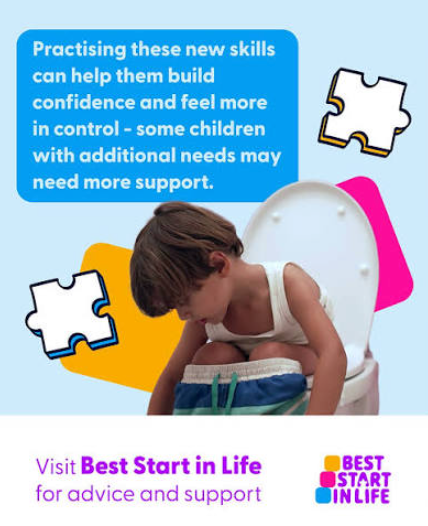
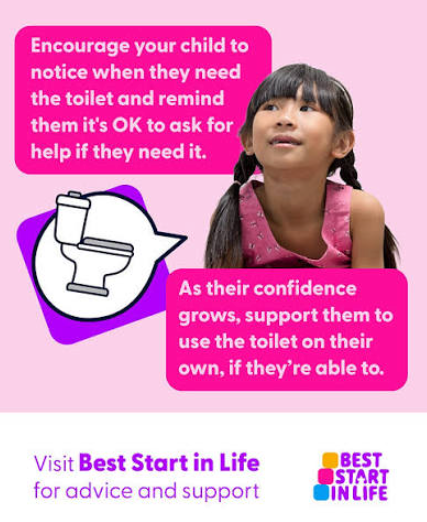
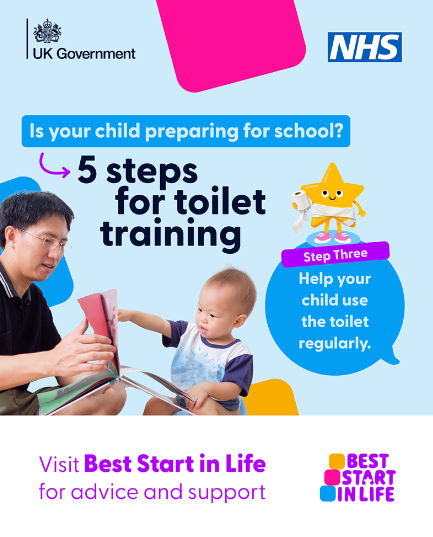
Guidance for parents
Tips
Looking for parenting and pre-school tips? You’ll find loads here, along with insights into our CBeebies shows and how they support your child's development.
DFE guidance for early years
Some children will learn to use the toilet quickly, while others will need more time and support. Waiting to start toilet training until after 30 months can make it harder for them to learn this new skill. Most children should be out of nappies before starting Reception year in school. The only exception should be children with a diagnosed medical need, such as a bowel or bladder condition.
Potty training guide
Being out of nappies not only helps children to feel confident, healthy and part of the group, it also means teachers can spend more time teaching and supporting children’s development in other ways.
How we support toilet training at nursery
We are happy to support children as they begin their potty-training journey. We understand that every child develops at their own pace, so we work closely with families to make the transition from nappies to using the toilet as positive, relaxed and consistent as possible.
When your child is ready, we will encourage regular toilet visits, offer gentle reminders and celebrate their successes. We will also support them with managing clothing, handwashing and developing independence.
Good communication between home and nursery is really important. We encourage parents and carers to let us know when they feel their child is ready, and we can work together to establish a consistent approach that helps your child feel confident and secure.
There is no pressure to rush — our aim is to make potty training a positive experience, following each child’s individual needs and readiness.